


Zenith of Everest

Sale!

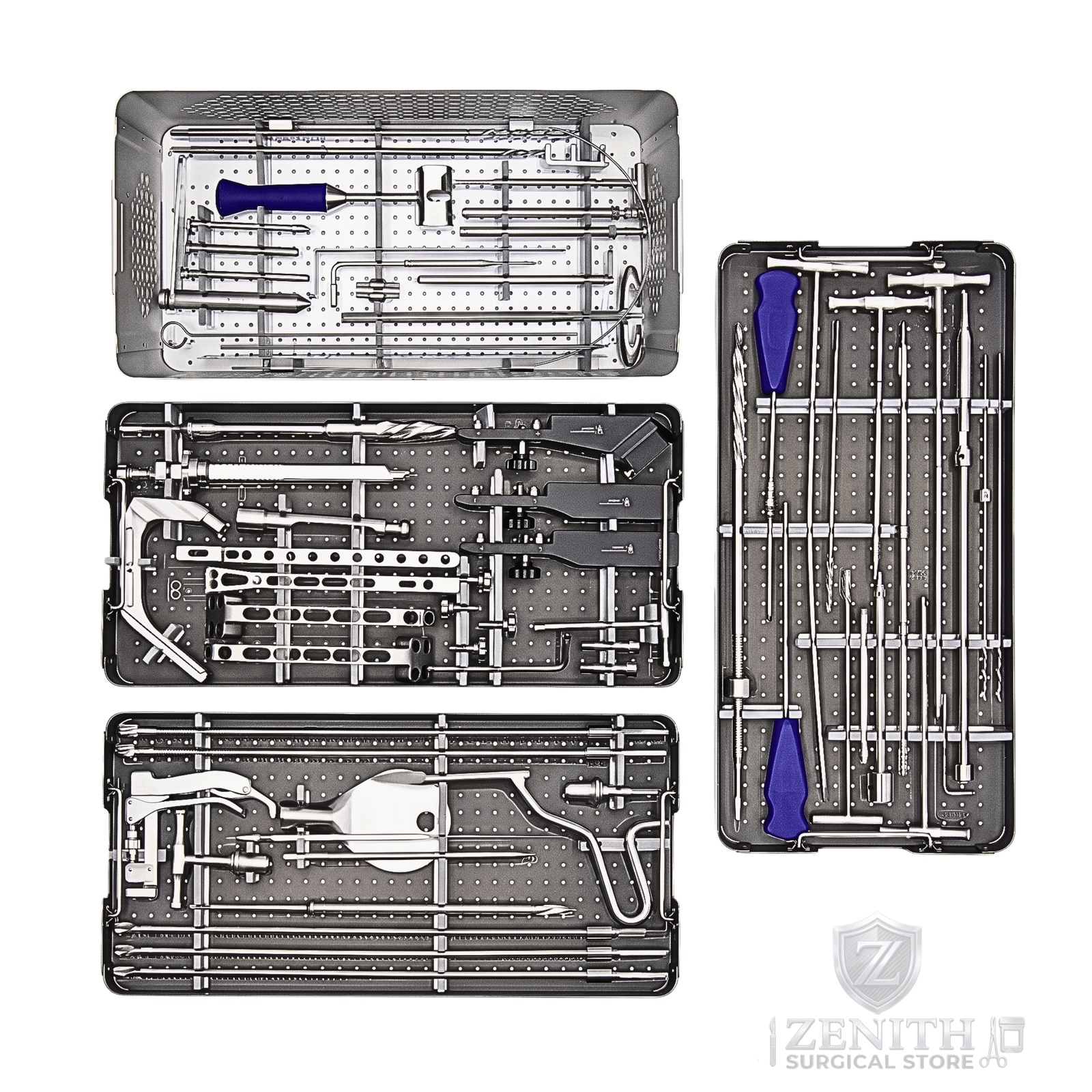
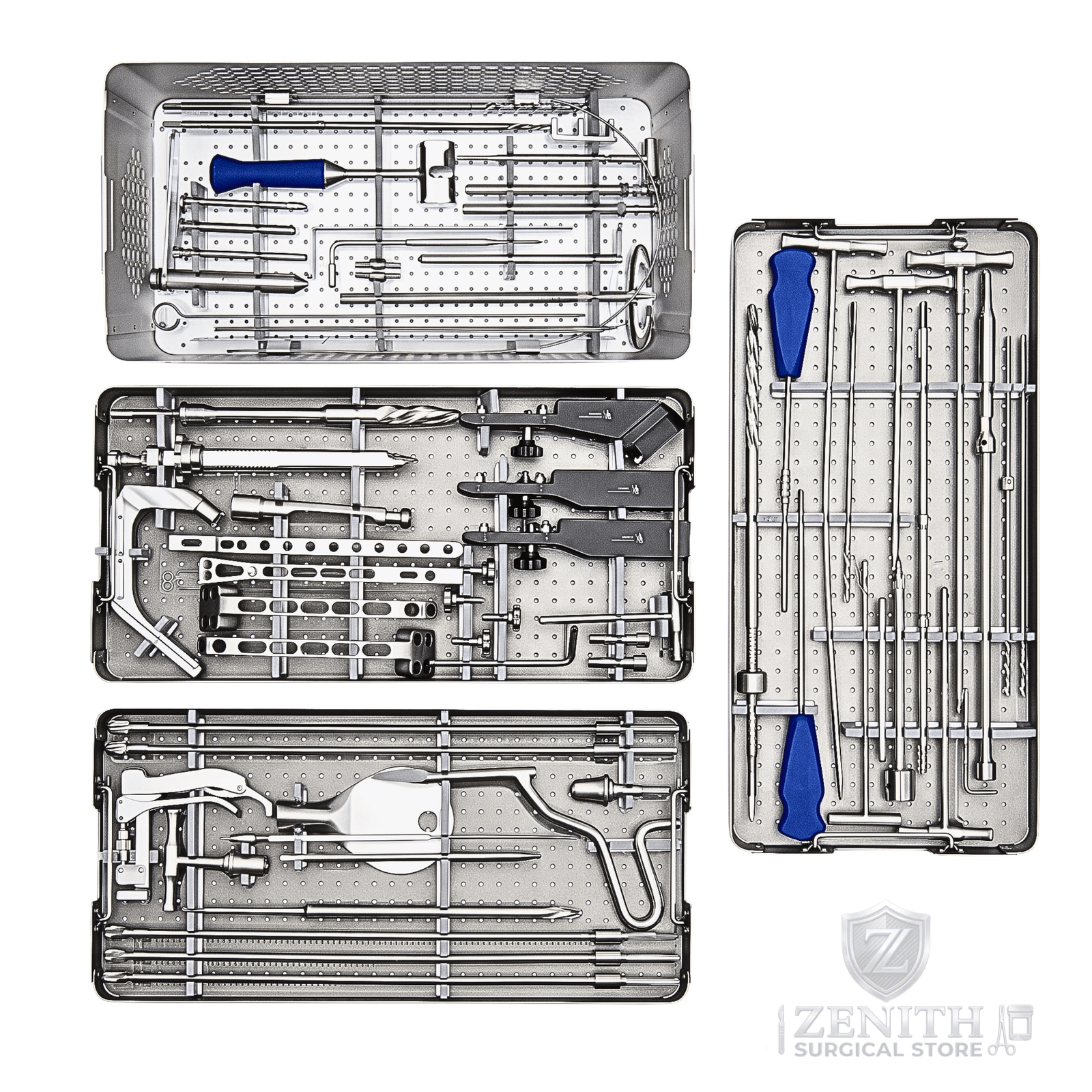
Femur Interlocking Nail Instrument Set-23 Pcs

Original price was: $1,450.00.Current price is: $1,380.00.

40+ bought in past month
Quantity
Wishlist

INVENTORY

Brand Name
About this item

A complete femur interlocking nail instrument set — covering the full sequence from reaming through nail insertion, distal targeting, screw placement, and extraction — gives an orthopaedic trauma surgery team everything needed for a controlled, reproducible femoral nailing procedure. Built from quality stainless steel and organized in a properly autoclavable cassette, this system remains one of the most important and consistently used instrument configurations in modern orthopedic trauma care.

Sr. No. Product Name Quantity
1 Mechanical Distal Jig for Femur with Handle 1 pc
2 Mechanical Distal Jig for Tibia with Handle 1 pc
3 Spanner 17 mm 1 pc
4 Proximal Jig Common for Tibia and Femur 1 pc
5 Nail Holding Bolt 1 pc
6 Ram 1 pc
7 Guide Rod Cannulated 1 pc
8 Driving Head 1 pc
9 Holding Forcep for Guide Wire 1 pc
10 Drill Sleeve for 3.2 mm Drill Bit 1 pc
11 Protection Sleeve 1 pc
12 Trocar 1 pc
13 Drill Sleeve for 4 mm Drill Bit 1 pc
14 Tissue Protector 1 pc
15 Drill Bit 3.2 mm × 250 mm for Jacobs Chuck 1 pc
16 Drill Bit 4 mm × 250 mm for Jacobs Chuck 1 pc
17 Bone Awl 1 pc
18 Screw Driver Hexagonal Extra Long, 3.5 mm Tip for 4.9 mm Locking Bolt 1 pc
19 Depth Gauge, Measuring up to 110 mm 1 pc
20 Medullary Tube 1 pc
21 Guide Wire Plain 1 pc
22 Guide Wire with Ball Tip 1 pc
23 Graphics Aluminium Box with Silicone Fittings 1 pc
Total 23 Product Entries 23 pcs
Looking for specific info?

Relating Products

Femur Interlocking Nail Instrument Set: A Complete Guide

A femur interlocking nail instrument set brings together everything needed to perform intramedullary femoral nailing — one of the most important and widely performed orthopedic trauma surgery techniques for stabilizing femoral shaft fractures. This guide walks through the key components of a complete set, how each instrument is used during femoral nailing, and the material standards behind a dependable kit.

What Is

Femur Interlocking Nail Instrument Set?


Femoral nailing places an intramedullary nail — a long metal rod — inside the femur‘s medullary canal to stabilize a fracture from within the bone itself. Once positioned, interlocking screws are placed through the nail at both the distal end and the proximal end, locking it in place and preventing shortening, rotation, or angulation at the fracture site. This approach — sometimes called IM nailing or simply intramedullary fixation — is the gold standard for most femoral shaft fractures because it provides reliable, early stability while allowing earlier weight-bearing and mobilization than plate fixation.

Core Instruments in the Set

Reamers and Reaming Assembly

The reamer assembly is the first major working component of the set, used to widen the medullary canal to the appropriate diameter before the nail is introduced. A complete reaming system includes a flexible reamer shaft that follows the canal’s curvature, multiple reamer heads in progressively larger diameters, and a reamer handle providing the connection to a surgical drill. Reaming creates a snugger fit for the nail, improving contact and fixation within the canal.

Nail Insertion Handle

The nail insertion handle connects to the proximal end of the femoral nail, allowing the surgeon to drive the nail into the canal with controlled force. This handle also serves as the mounting point for the targeting device, which guides screw placement once the nail is seated.

Targeting Device

The distal targeting device — sometimes called the distal aiming arm — attaches to the insertion handle and projects the geometry of the nail‘s distal screw holes outward, giving the surgeon a reference for drilling and screw placement without relying entirely on imaging. Accurate targeting at the distal end is one of the more technically demanding steps in femoral nailing, and a well-calibrated targeting device makes this step more reliable and efficient.

Steinmann Pin and Bone Holding Forceps

A Steinmann pin is used during preliminary reduction and positioning steps before nail insertion, providing a means of controlling the fracture fragments and maintaining alignment while the nail is prepared. Bone holding forceps assist with fragment control during surgery, keeping the fracture reduced while the IM nail and associated components are introduced.

Tissue Protection Sleeve

A tissue protection sleeve is placed at the screw entry points before drilling, creating a safe channel through soft tissue to the bone surface without the drill contacting or damaging surrounding muscle, nerves, or vessels. This small but important instrument meaningfully reduces soft tissue trauma during the interlocking screw placement steps.

Mallet

A surgical mallet drives the nail through the medullary canal during insertion, providing controlled, percussive force without requiring excessive manual pressure. The mallet works alongside the nail insertion handle as a paired instrument throughout the seating phase.

Screw Drivers and Extraction Tools

Once the nail is fully seated, dedicated screw drivers place the interlocking screws through the targeting guide. An extraction handle or screw extraction instrument is included in the complete set for revision or removal cases, allowing previously placed nails or screws to be removed cleanly without damaging surrounding bone.

Material Standards and Sterilization

Every reusable instrument in a quality femur interlocking nail instrument set is built from surgical-grade stainless steel, often meeting German stainless steel manufacturing standards for the dimensional precision and surface quality that orthopaedic instruments demand. The complete set is organized in a perforated autoclavable cassette or tray, keeping every component clearly laid out and protected during sterilization cycles between procedures.

Related Orthopaedic Instrument Systems

A femoral nailing system is one of several intramedullary nail systems used across orthopaedic trauma surgery. Tibial nailing systems follow the same core principles with anatomy-specific adaptations, while retrograde femoral nailing variants adapt the entry approach without changing the fundamental instrument set significantly. All of these systems sit within a broader orthopaedic trauma surgery ecosystem, where consistent, quality instrumentation supports reliable fracture fixation outcomes across a wide range of presentations.


Scroll to Top