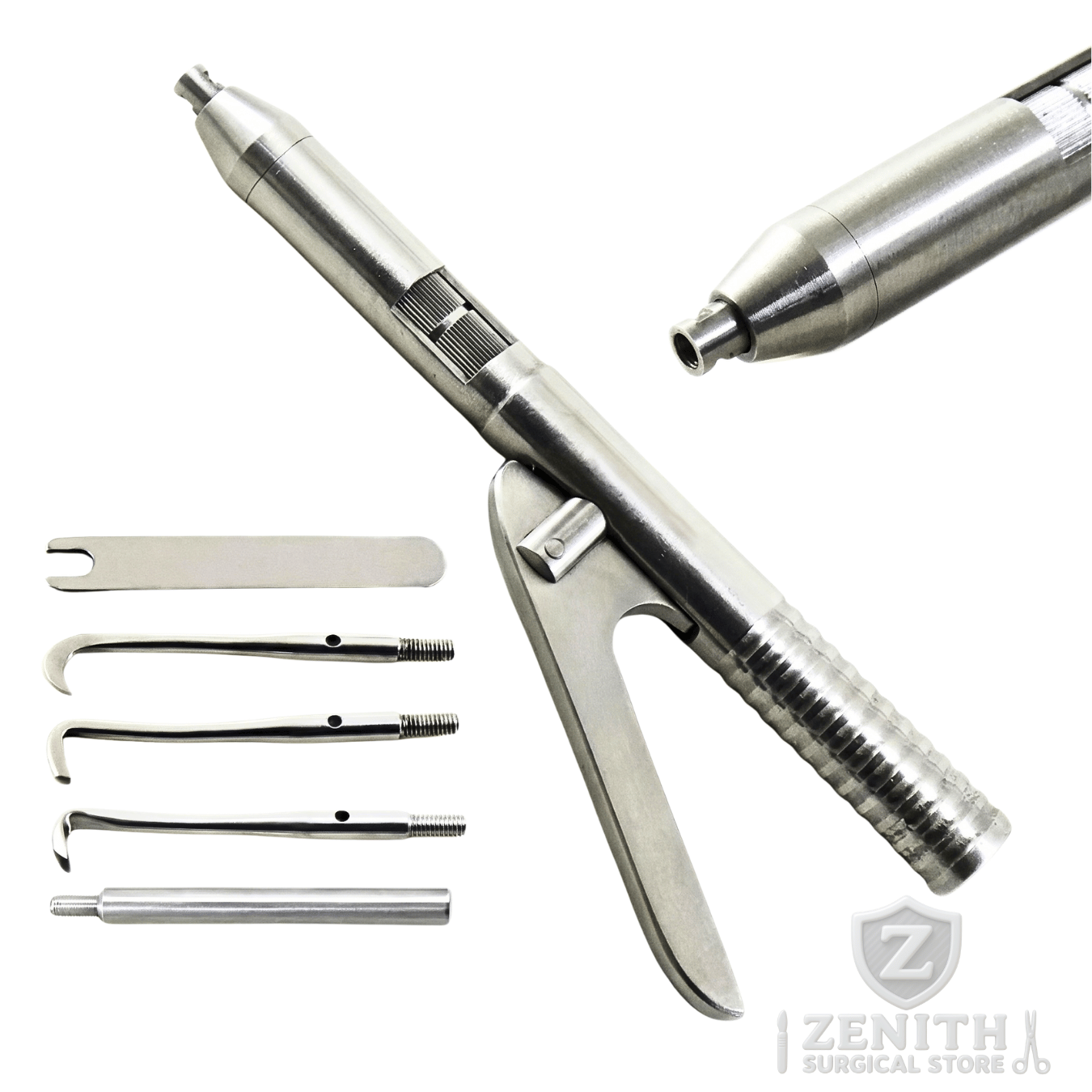
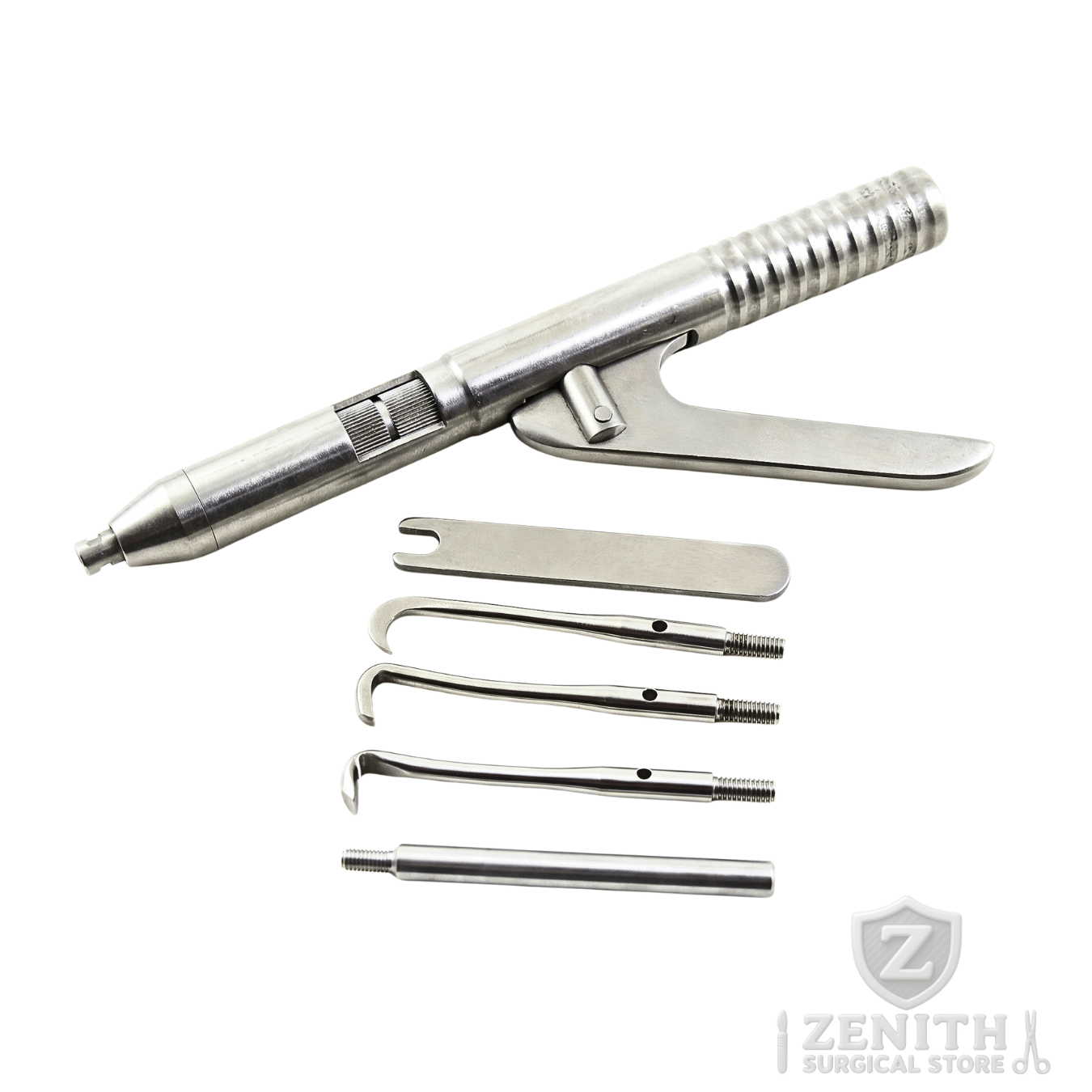
How the Instrument Supports Restorative Dentistry
In restorative dentistry, crown removal tool may be needed when a restoration requires replacement, repair, or further examination. A restoration can become unsuitable because of damage, changes in the supporting tooth, or problems with its fit. The clinician first determines whether removal is appropriate and which technique offers the best balance of access and preservation.
A suitable dental instrument helps the dentist work with greater control during this process. The gun-style mechanism is intended to assist with loosening the restoration rather than relying on uncontrolled force. Even so, the amount of force and the direction of application require clinical judgment.
The term automatic describes the instrument’s mechanism; it does not mean the procedure is entirely hands-free. The clinician remains responsible for positioning, monitoring the restoration, and deciding when to stop or change methods.
Crown and Bridge Removal Considerations
A crown may be supported by a natural tooth or an implant-related restoration, while a bridge replaces one or more missing teeth and is supported by adjacent teeth or implants. These differences affect the removal approach. The design of the restoration, the type of cement, and the condition of the supporting structures all influence the procedure.
When a restoration is firmly cemented, removal may require careful assessment before a technique is selected. A dentist may consider whether the restoration should be preserved, whether the underlying tooth needs further treatment, and whether an alternative removal method is more appropriate.
A mechanical spreader or impact-based mechanism should only be used as intended by the manufacturer. Excessive force or unsuitable positioning may damage the restoration, supporting tooth, or surrounding tissues. For that reason, the instrument should be used by trained dental professionals who can assess the risks and choose an appropriate method.
Material Quality and Instrument Construction
Material quality is an important consideration when selecting reusable dental equipment. 316L stainless steel is commonly used in medical and dental instruments because of its corrosion resistance and suitability for many reusable instrument designs. Actual performance depends on the material grade, manufacturing quality, surface finish, and care procedures.
Products described as German stainless steel should be evaluated using the supplier’s documented material and manufacturing information rather than the description alone. Buyers can review specifications, construction details, and care instructions before selecting an instrument for clinical use.
Durable construction can be valuable in a professional dental setting, where instruments are handled repeatedly and must remain in suitable condition. However, no material eliminates the need for inspection, proper cleaning, and maintenance.
Cleaning, Sterilization, and Storage
Reusable dental instruments require appropriate reprocessing between patients. The exact process depends on the instrument’s construction, the attachments supplied, and the manufacturer’s validated instructions.
A dental kit should be checked after use to identify visible residue, wear, corrosion, or damage. Removable attachments should be handled according to the manufacturer’s directions so that all applicable surfaces can be cleaned and inspected effectively.
An autoclavable cassette may be useful for organizing compatible instruments during sterilization and storage. However, the cassette and every instrument component must be confirmed as suitable for the intended sterilization process. The presence of stainless steel alone does not establish that an entire device or mechanism can be autoclaved.
The device should not be immersed, lubricated, disassembled, or sterilized in a way that conflicts with its instructions. Correct maintenance helps preserve instrument condition and supports consistent clinical workflows.
Choosing a Suitable Crown Removal Tool
When evaluating a crown and bridge removal system, dental practices and purchasing teams should consider more than the number of attachments supplied. Important factors include the intended clinical applications, attachment compatibility, handling, maintenance requirements, and availability of clear product documentation.